-
SUZANNE - BROWN ORGANIC COTTON KIMONO
Regular price €250,00Regular price -
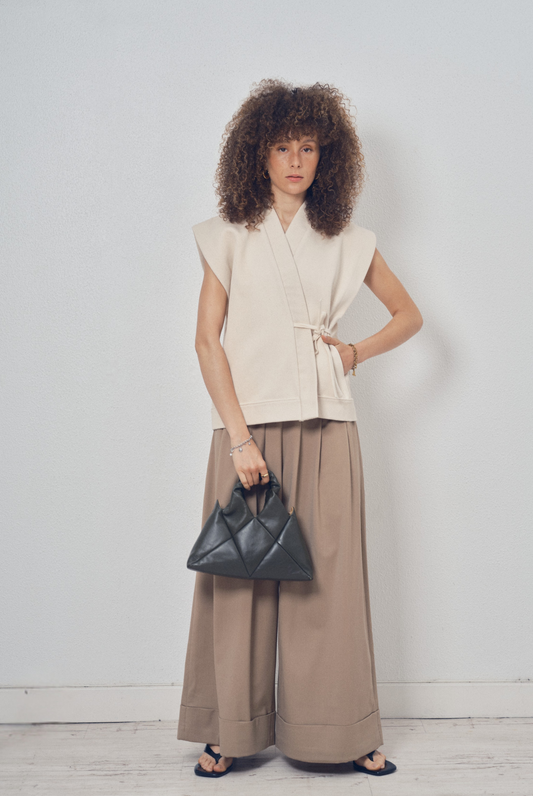
CLAUDE - KIMONO SANS MANCHE ECRU
Regular price €250,00Regular price -
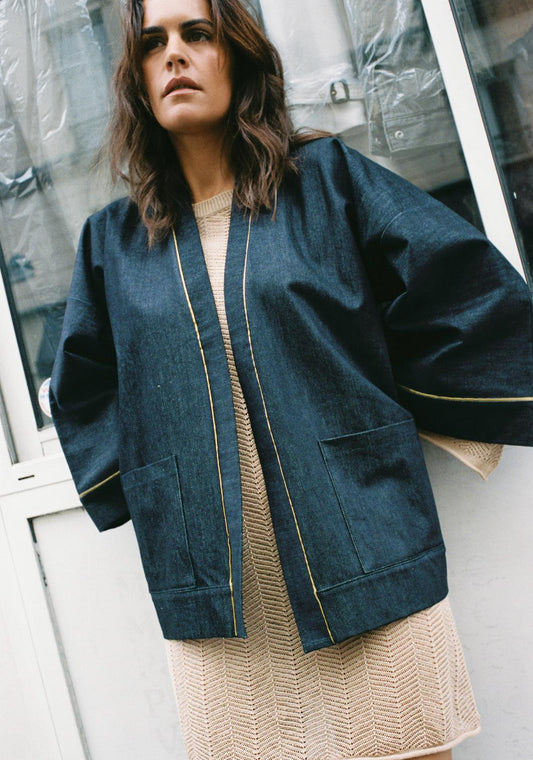
EUGENE – BLUE DENIM & GOLD TRIM KIMONO
Regular price €250,00Regular price -
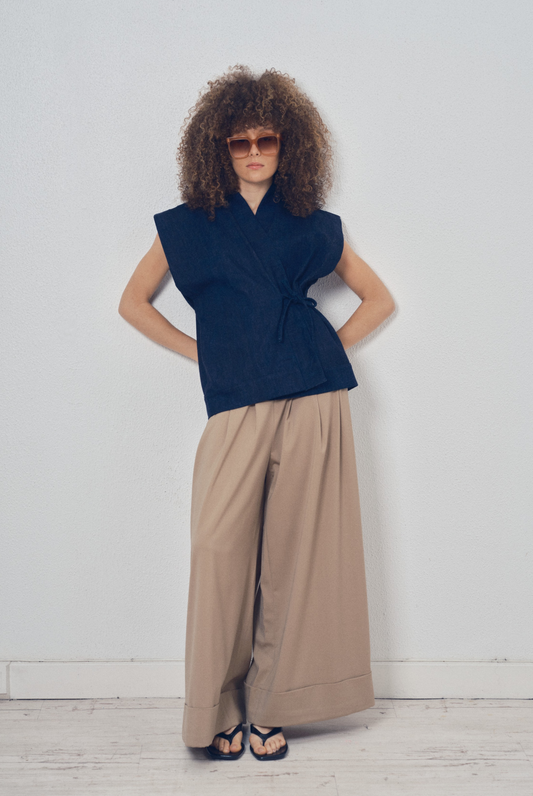
PERLA - KIMONO SANS MANCHE DENIM BLEU
Regular price €190,00Regular price -
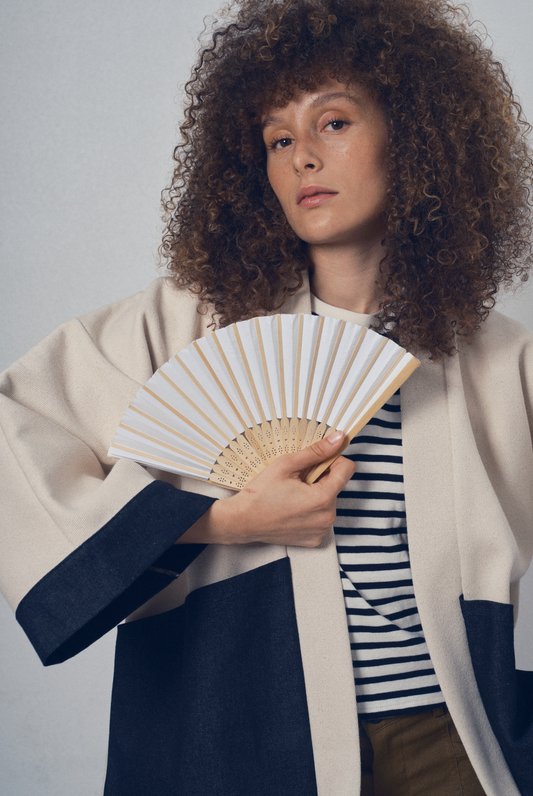
SIMON - VESTE KIMONO ECRU ET DENIM NOIR
Regular price €320,00Regular price -
VERDEAU - JACQUARD KIMONO WITH GEOMETRIC PATTERN
Regular price €390,00Regular price -
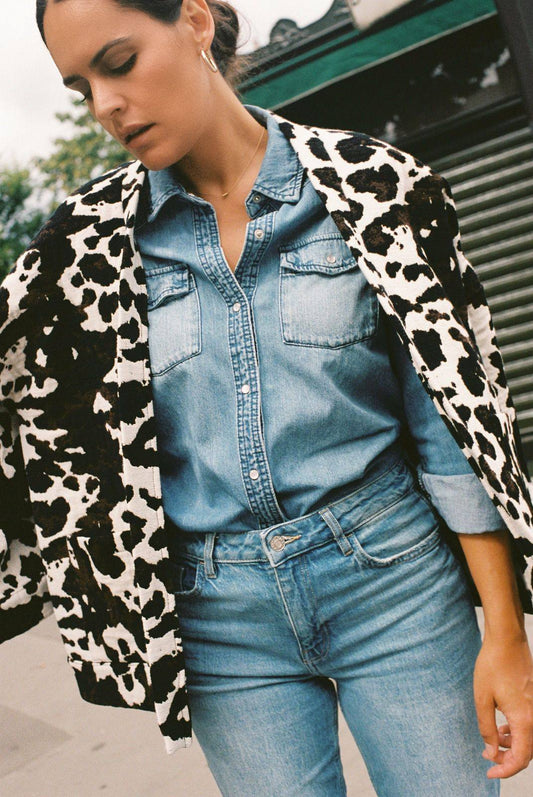
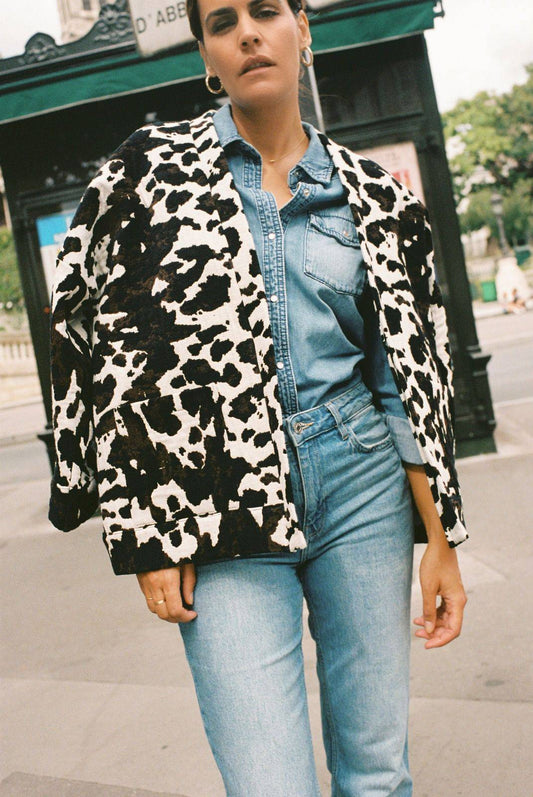
ITO – BLACK & WHITE JACQUARD KIMONO
Regular price €320,00Regular price -
MARCEL - BLACK DENIM KIMONO
Regular price €250,00Regular price -
 Sold out
 -
DODAT - CAVIAR WOOL & OUD VELVET KIMONO
Regular price €350,00Regular price -
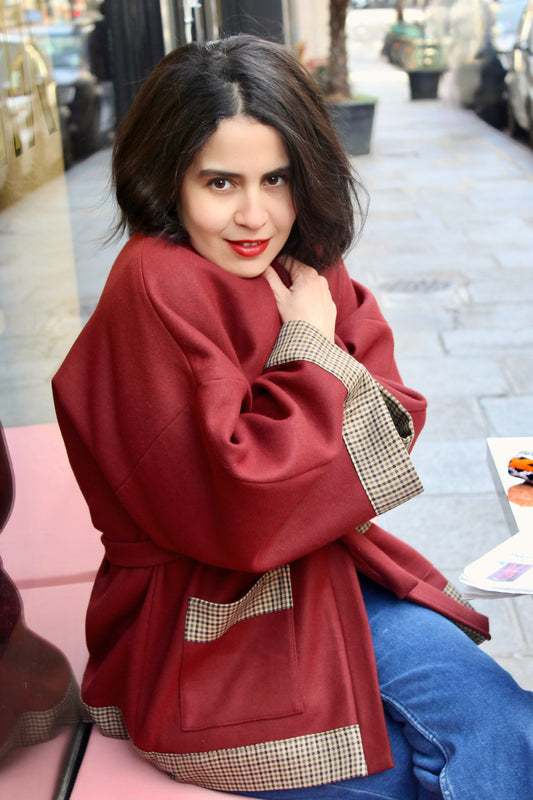
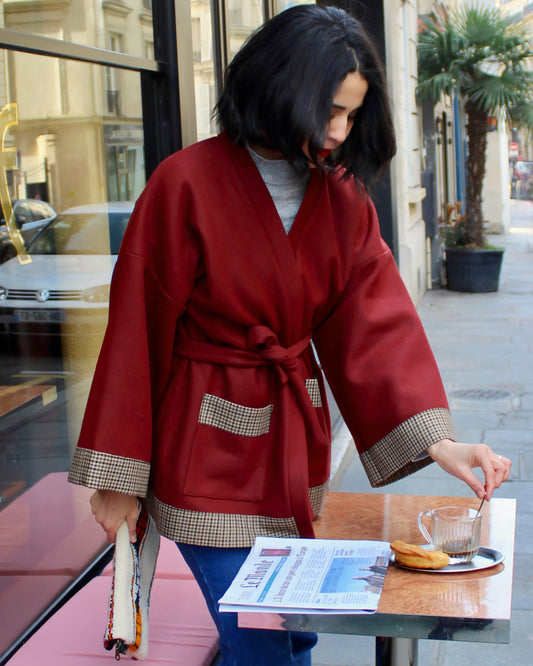
GUSTAVE - BURGUNDY WOOL & HOUNDSTOOTH KIMONO
Regular price €320,00Regular price -
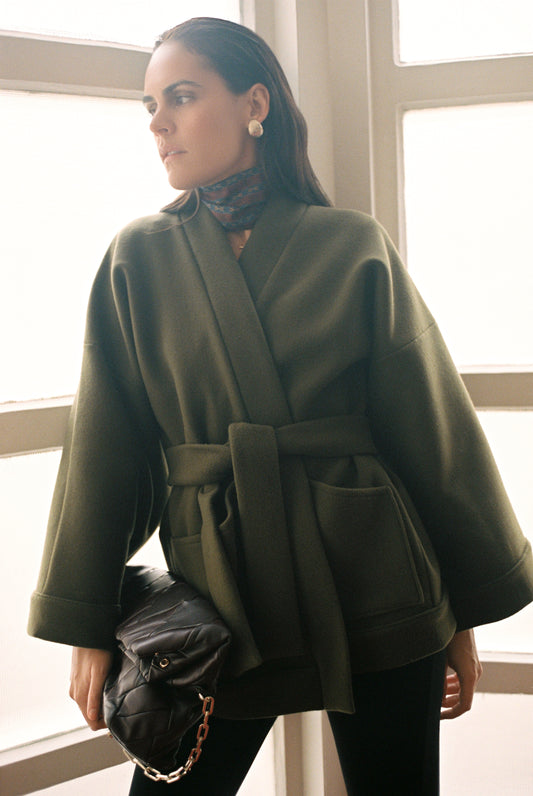
RICHELIEU - KHAKI WOOL & CASHMERE KIMONO
Regular price €400,00Regular price -
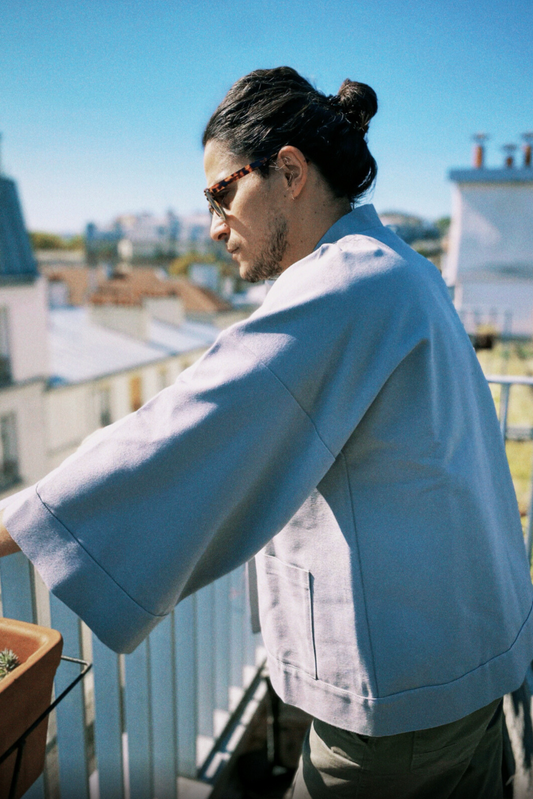
LEON - GREY ORGANIC COTTON KIMONO
Regular price €250,00Regular price -
-
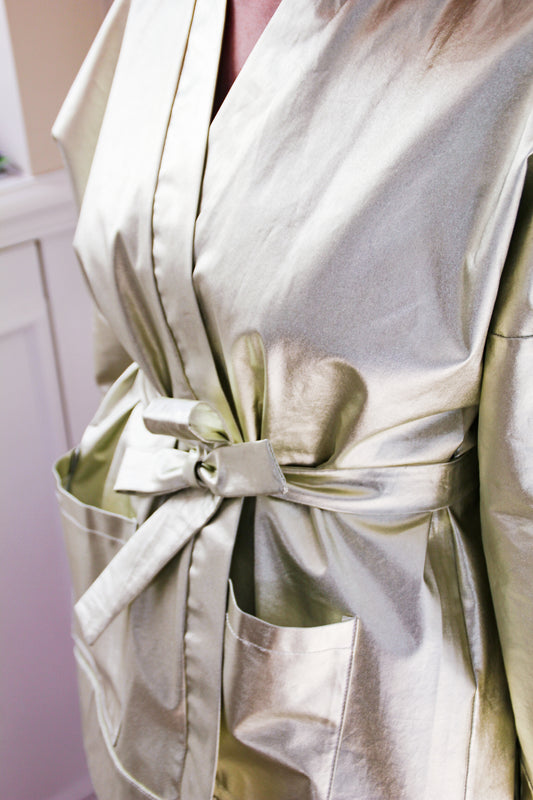
HONORÉ - GOLD COTTON KIMONO
Regular price €200,00Regular price













The short kimono: balance and versatility
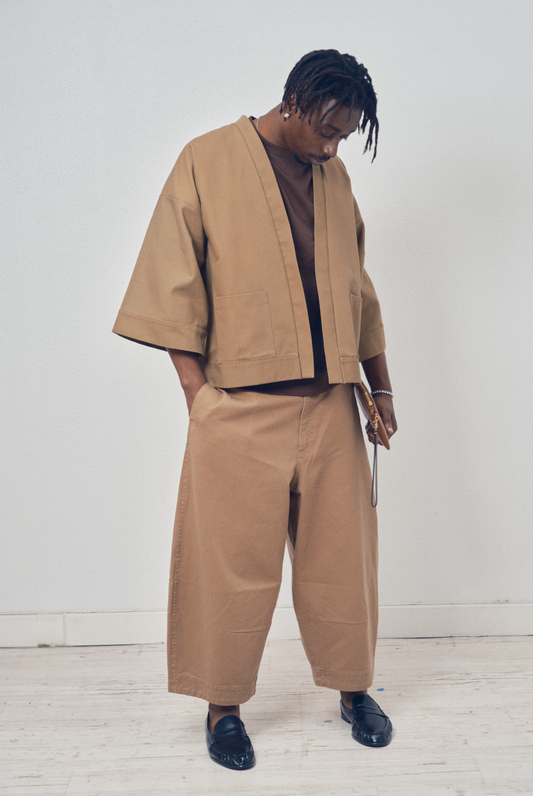
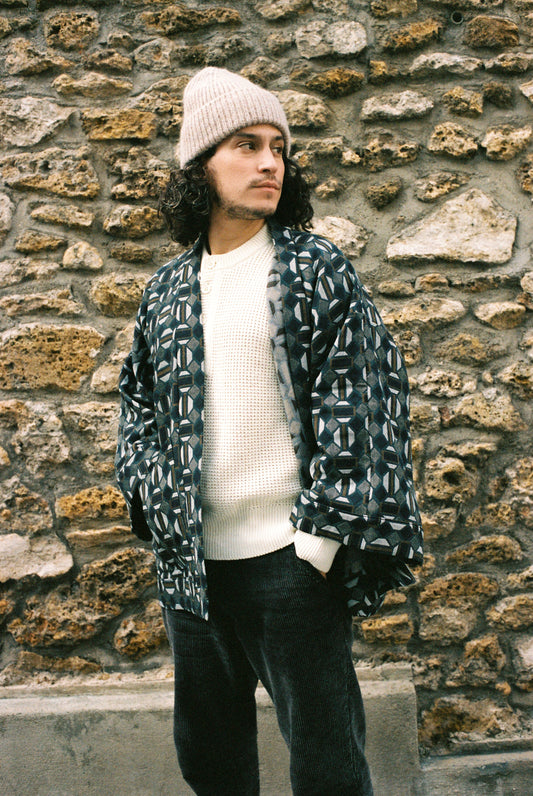
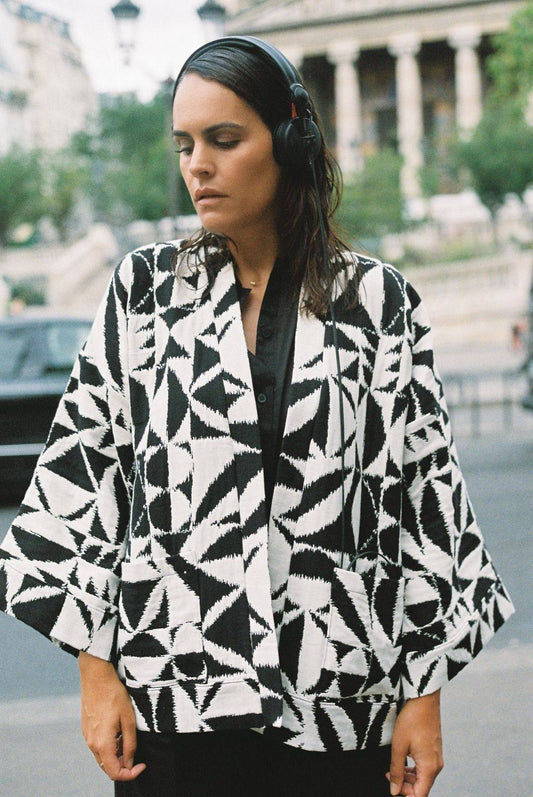
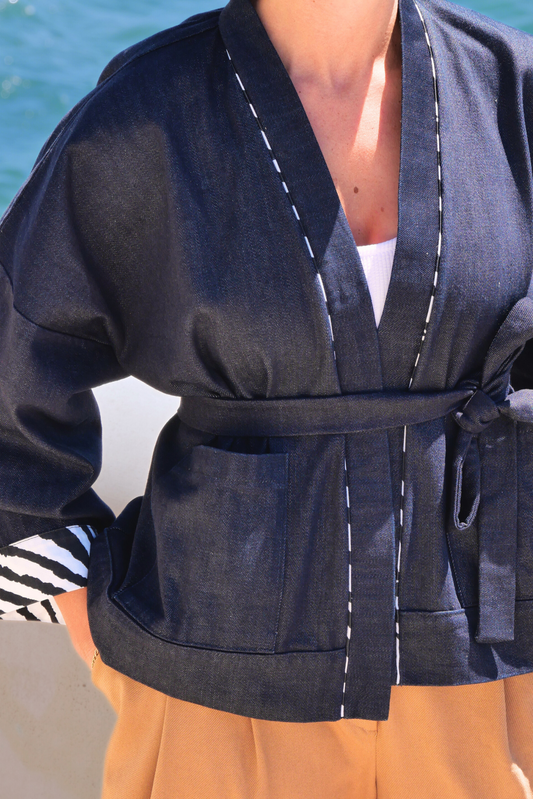
The short cut falls below the hips without reaching the knee. It sits between the longer cropped version and the more voluminous mid-length or long styles. This intermediate proportion creates a clean presence without excessively elongating the silhouette.
In the world of clothing, this length is familiar. It's found in work jackets, some pea coats, short coats, and updated suits. It provides enough coverage to create a structured look while maintaining freedom of movement and precision.
Applied to the kimono cut, the shorter version adjusts the fullness without altering the overall structure. The straight lines, wide sleeves, and flexible construction remain, but the sloping silhouette stops short. The overall look gains stability and clarity.
A measured proportion
The short cut acts as a point of balance. It covers the hips, frames the bust, and stops short before creating a wrap-around effect. This length allows for a clear reading of the proportions. The upper body retains the generous proportions characteristic of the kimono cut, while the line stops at a level that stabilizes the overall silhouette. The figure is neither fragmented nor diluted.
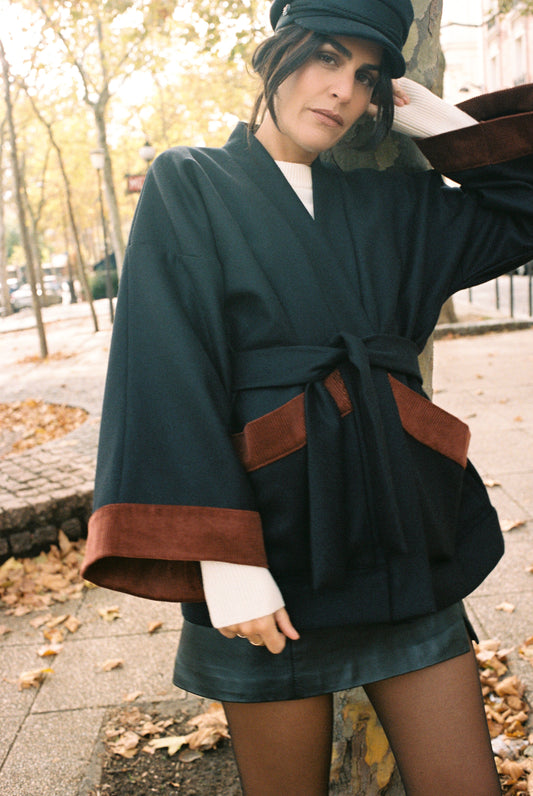
Worn open, the short kimono maintains a fluid vertical line. Belted, it accentuates the waist and redefines proportions. The garment can thus evolve without losing its coherence. This modularity makes it a cut particularly suited to urban life. It moves with you, allows for layering, and fits naturally into a wardrobe designed around city life.
A cut that transcends seasons
The strength of the short kimono also lies in its adaptability.
Made of wool, it transforms into a winter kimono jacket. The dense fabric provides warmth and structure while maintaining a fluid silhouette. It protects the upper body without weighing it down, and allows for layering a sweater or base layer underneath.
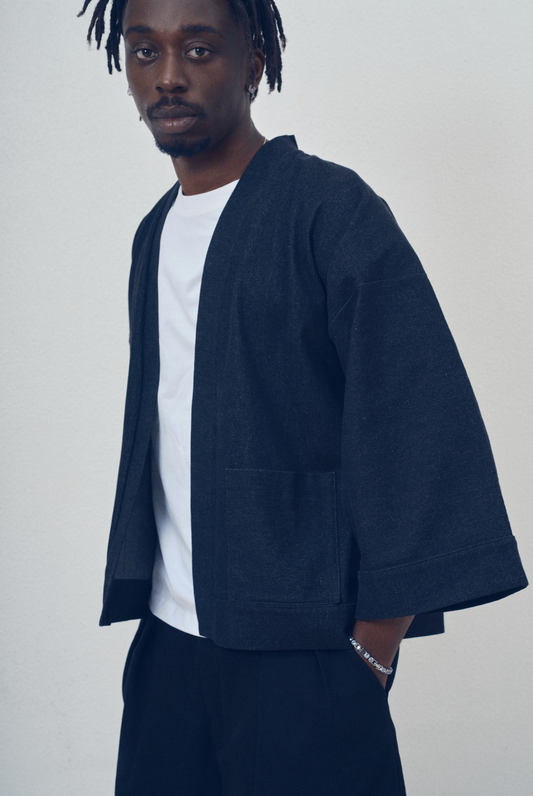
In denim or thick cotton, the shorter version takes on a more structured look. The fabric gives the line a clean, defined silhouette. The overall effect is more precise, without losing the fluidity inherent to the kimono cut.
The sleeveless version further accentuates this structure. The absence of sleeves highlights the shoulder line and clarifies the silhouette. Worn over a shirt, t-shirt, or fine knit, it acts as an architectural element.
In each case, the proportion remains the same. It's the materials that modulate the feeling: enveloping in winter, lighter in warmer weather. The cut, however, remains consistent.
A structuring variation at Atelier Sarita
At Atelier Sarita, the short kimono is part of a precise work on proportions. It does not transform the kimono cut, it adjusts its amplitude.
The lines retain their straightness, the sleeves their fullness, the construction its fluidity. The shorter version simply creates a more restrained presence. It structures without seeking effect.
Worn open, it reveals the outfit it frames. Belted, it alters the balance of proportions and accentuates the waist. This dual functionality stems from practicality rather than decorative intent. Whether crafted from wool for winter, denim for warmer seasons, or sleeveless to emphasize the silhouette, the short kimono maintains the same purpose: to offer a clean line, perfectly suited to the urban lifestyle.
Among the various styles—crop, short, mid-length, long—it occupies a balanced position. A measured proportion, neither ostentatious nor understated.
Contemporary stability
The short kimono is not an intermediate step. It is a proportion in itself.
By covering the hips while maintaining a controlled silhouette, it offers stability and adaptability. Worn open or belted, available in wool, denim, or sleeveless, it adapts to the seasons and uses without altering its structure.
At Atelier Sarita, it embodies a precise interpretation of the kimono cut: structured, modular, designed for the city and to last.