-
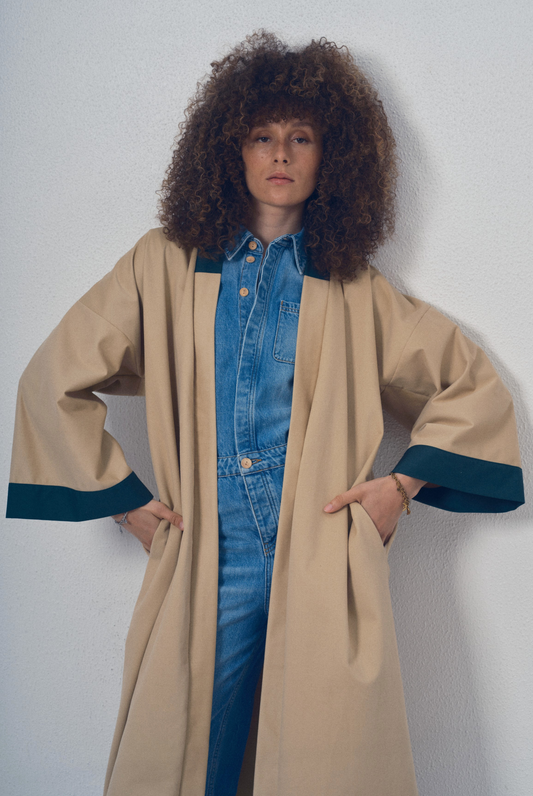
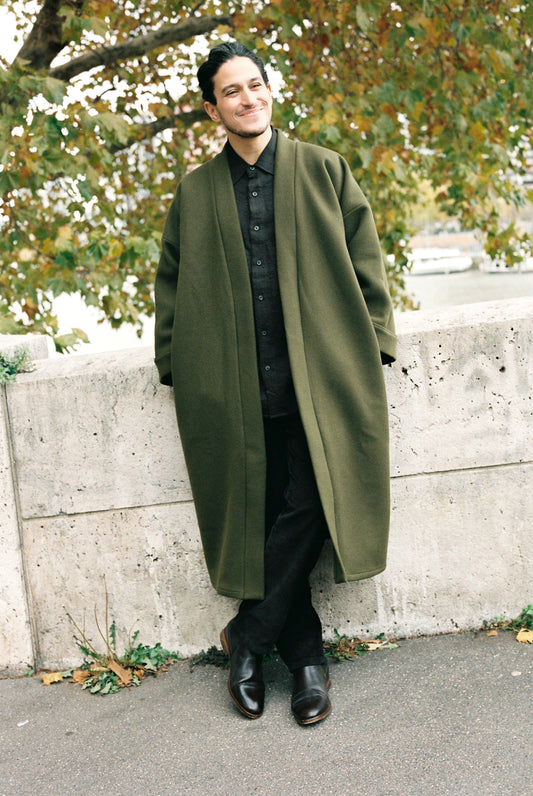
CHARLOT - TRENCH AUX LIGNES KIMONO BEIGE ET VERT
Regular price €350,00Regular price -
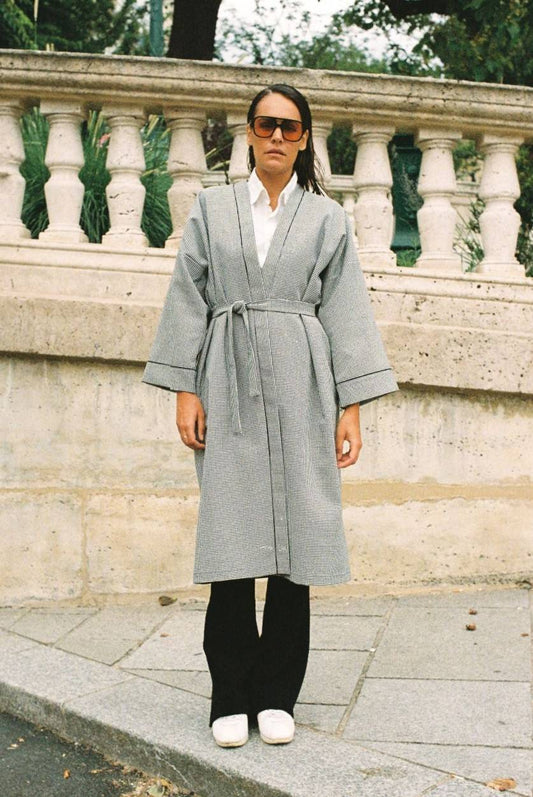
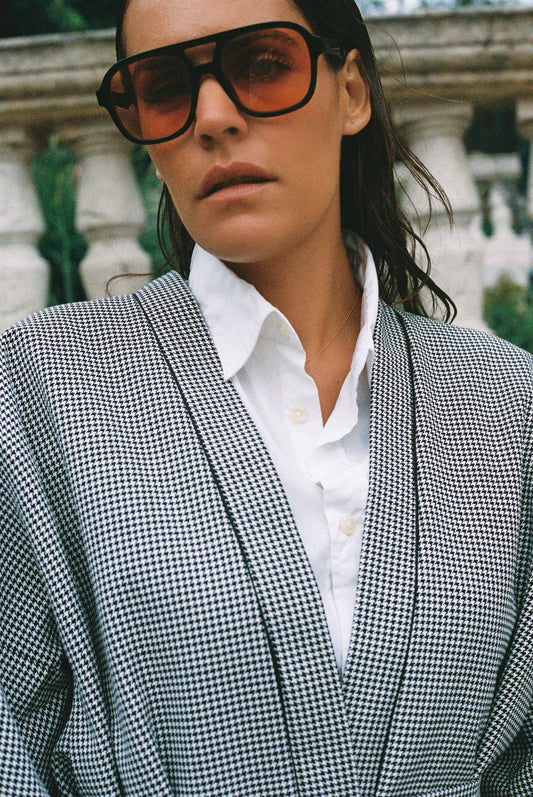
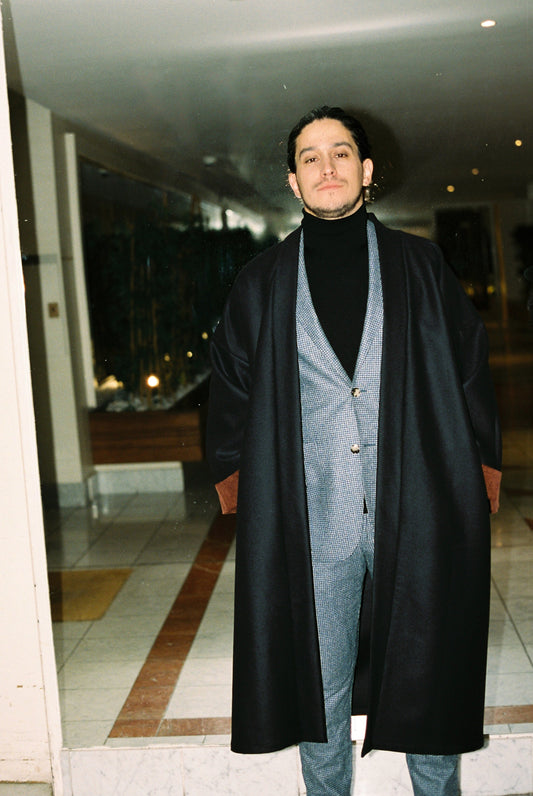
MANSART – BLACK & WHITE HOUNDSTOOTH WOOL KIMONO
Regular price €350,00Regular price -
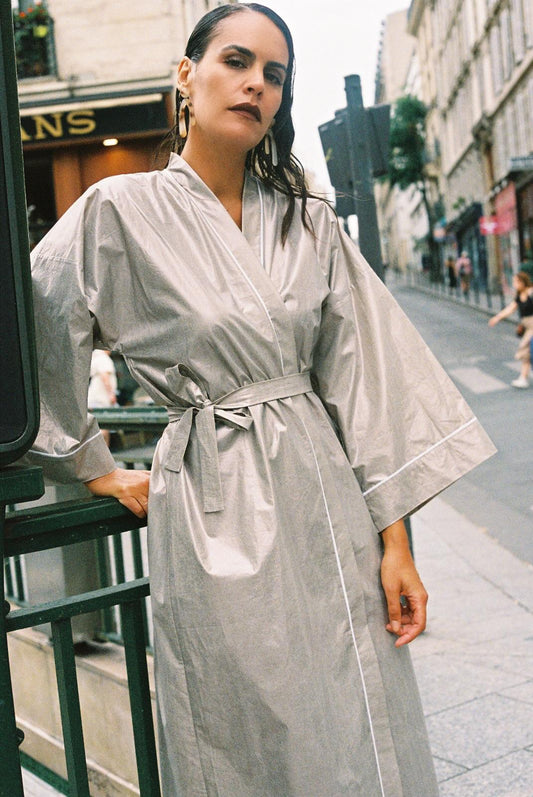
CRYSTAL – SILVER COTTON POPLIN KIMONO
Regular price €230,00Regular price -
CHOISEUL – ARCTIC WOLF WOOL KIMONO
Regular price €490,00Regular price -
COLBERT - CAVIAR WOOL & OUD VELVET KIMONO
Regular price €400,00Regular price -
VIVIENNE - KHAKI WOOL & CASHMERE KIMONO
Regular price €450,00Regular price -
DAMIEN - HOUNDSTOOTH WOOL KIMONO
Regular price €320,00Regular price -
GARNIER – NAVY WOOL KIMONO & GOLD EDGING
Regular price €390,00Regular price -
MARIUS - VELVET & WOOL KIMONO
Regular price €320,00Regular price -
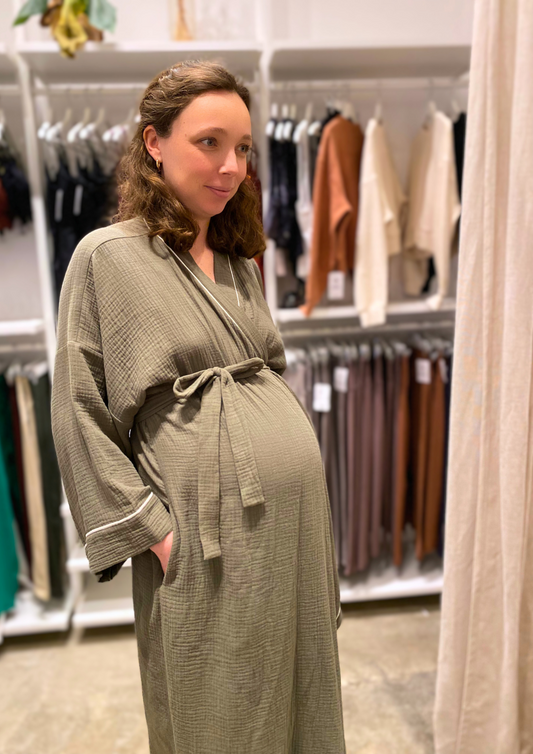
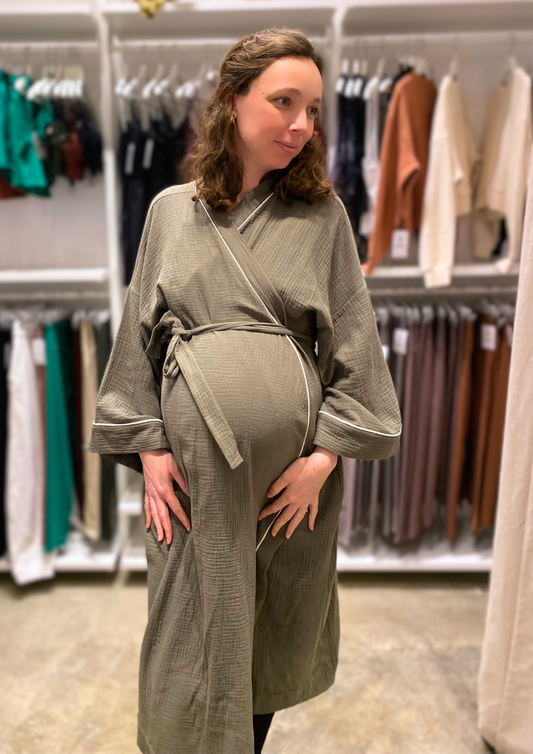
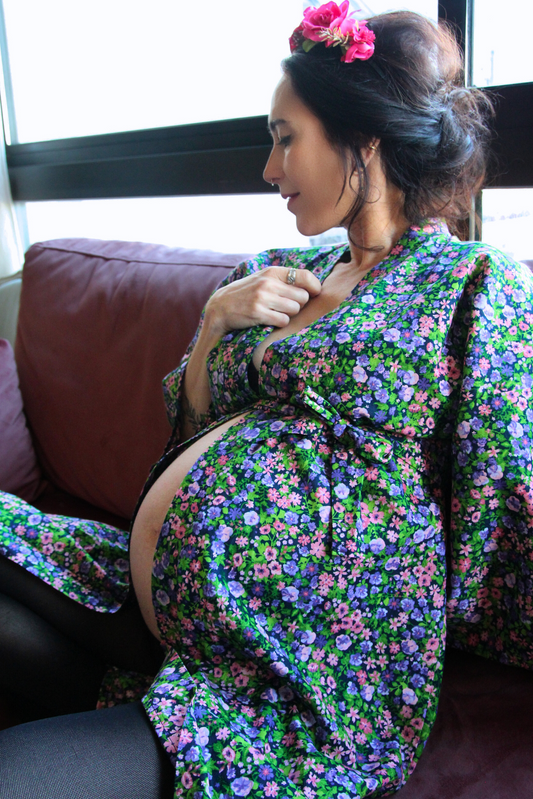
MATERNITY KIMONO
Regular price €230,00Regular price -
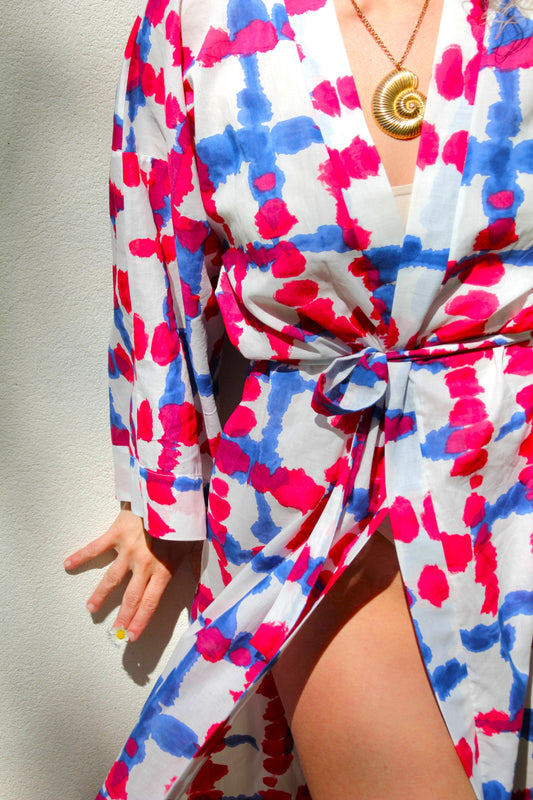
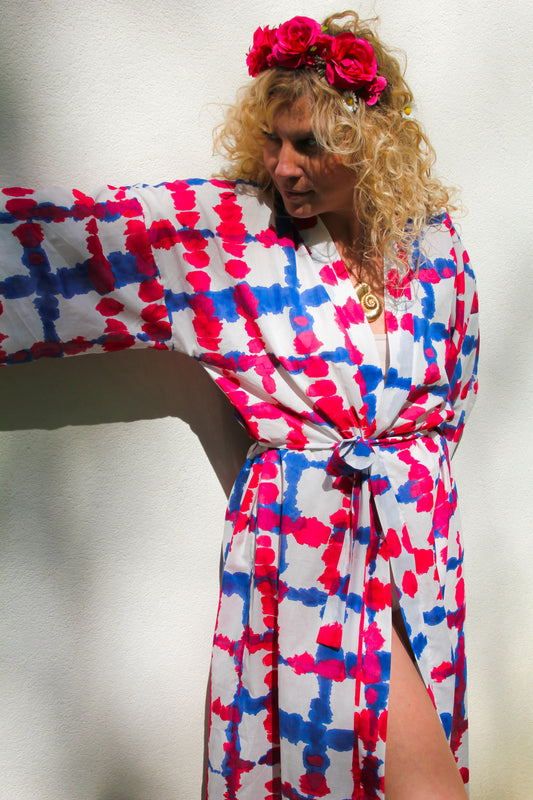
RIO - BLUE & FUCHSIA COTTON VOILE KIMONO
Regular price €150,00Regular price€190,00Sale price €150,00Sale -
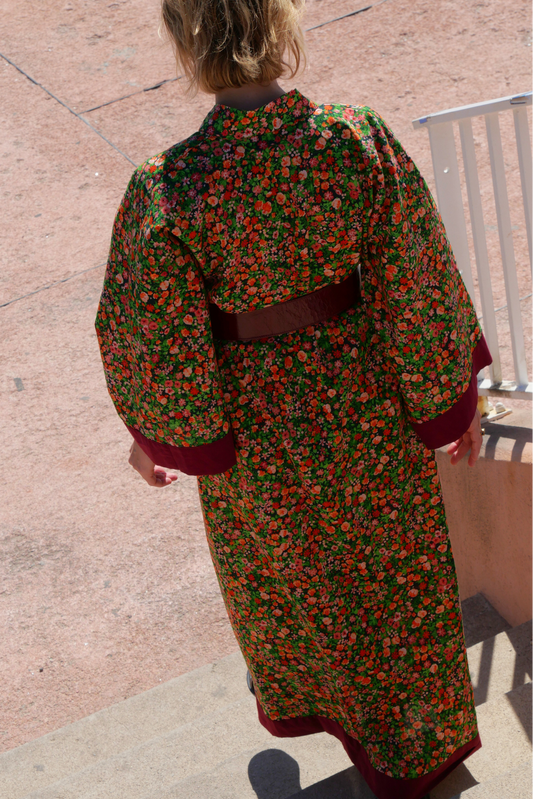
FLOR - FLORAL & BURGUNDY COTTON KIMONO
Regular price €135,00Regular price€180,00Sale price €135,00Sale -
-
-
-
STRIPE - BLACK & ZEBRA COTTON KIMONO
Regular price €135,00Regular price€180,00Sale price €135,00Sale






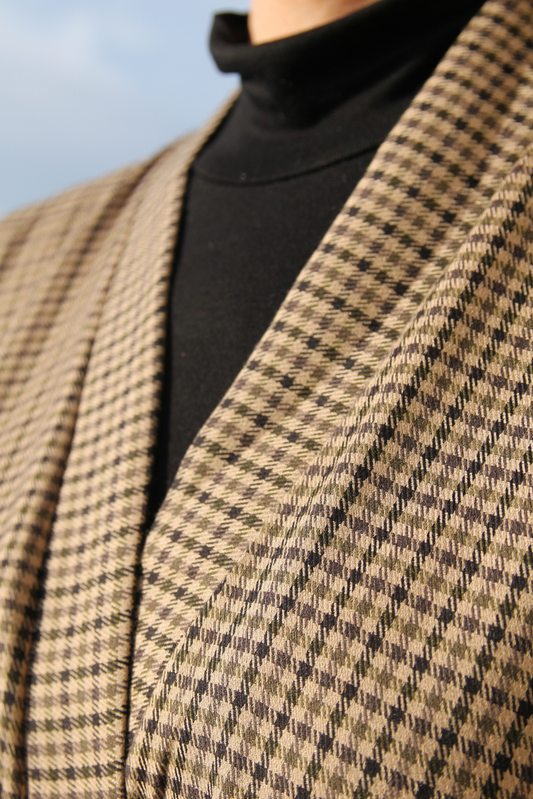
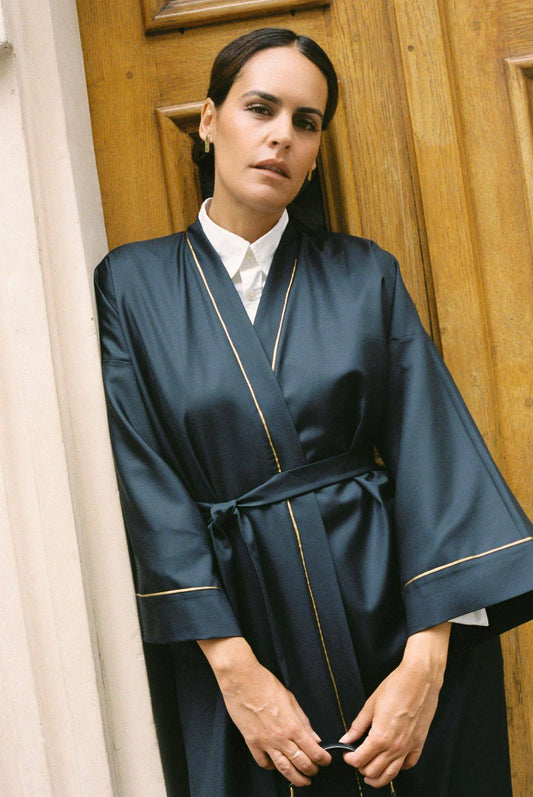
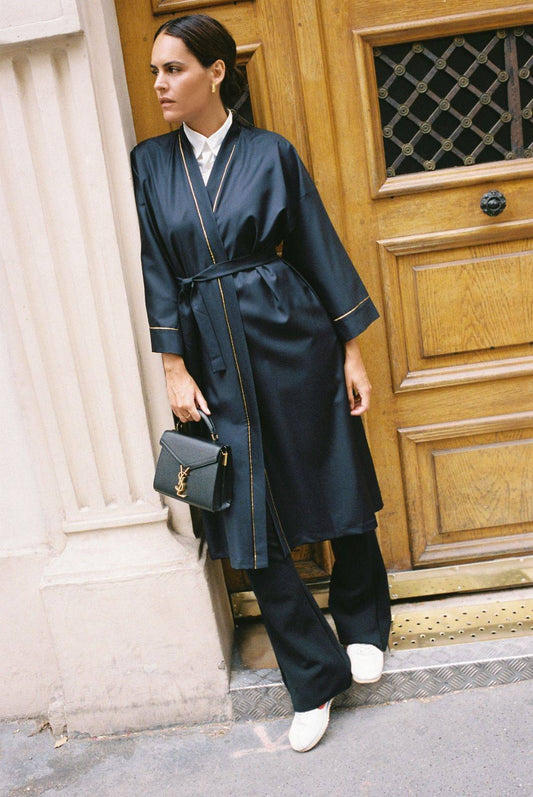

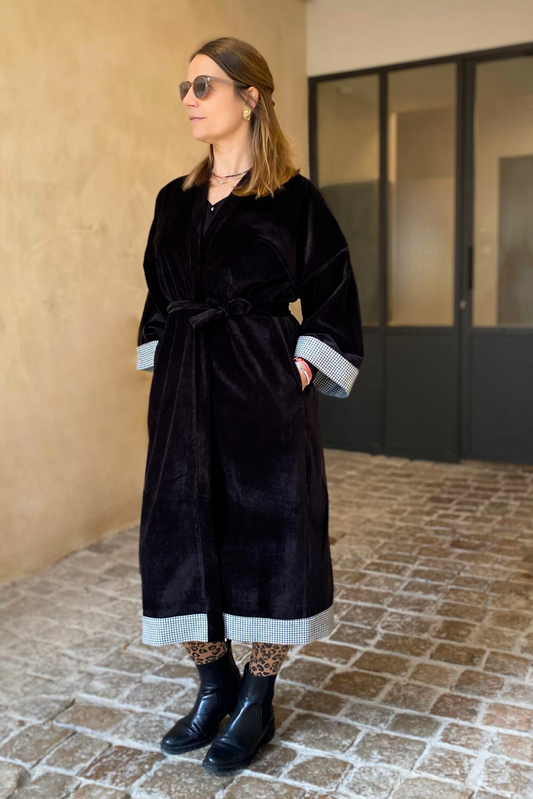




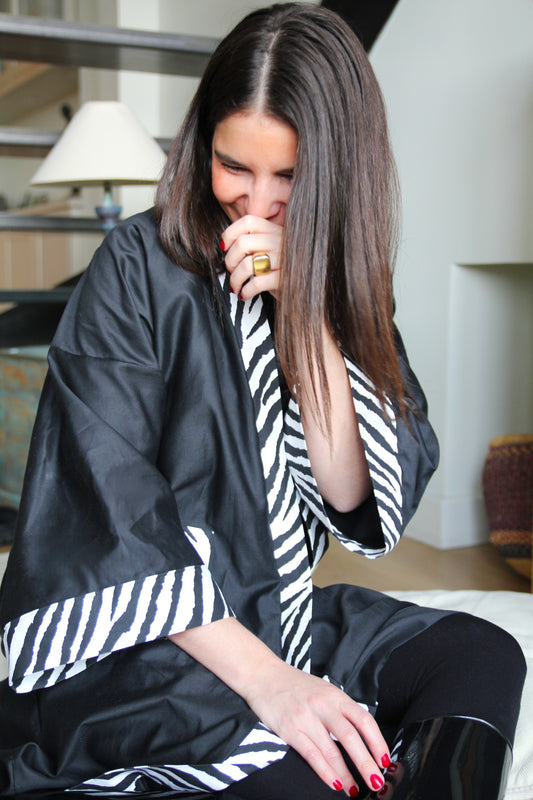
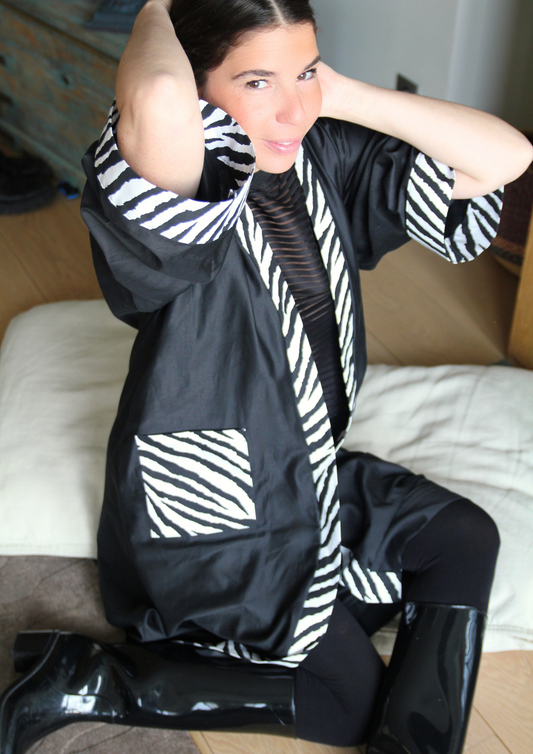
The long kimono: breadth, verticality and presence
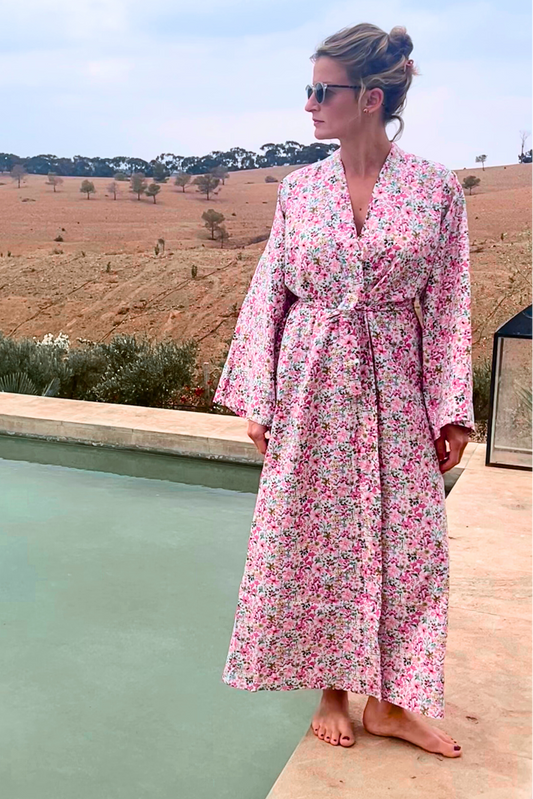
The longer cut falls below the knee, sometimes to the calf, sometimes even lower. It creates a continuous vertical line and profoundly alters the perception of the silhouette. Unlike shorter proportions, it doesn't segment the body: it elongates it.
In the history of the kimono, the long version is familiar. It is part of its identity. The garment follows the body in a downward movement, without interruption. It envelops without confining and creates a visual continuity that contributes as much to the style as to the comfort.
In a contemporary wardrobe, the long kimono retains its enveloping quality while adapting to urban wear. Depending on the fabric and how it's worn, it can be interpreted as a loose-fitting jacket, a structured coat, or a long kimono dress. The proportions remain the same; it's the function that evolves.
A fully deployed verticality
The long cut primarily affects the height. By extending the line to the calf or beyond, it creates a continuous axis. The eye follows the silhouette as a whole, without interruption. This continuity influences posture. The body appears more slender, more stable. The garment becomes a natural extension of the line.
In the kimono cut, this proportion highlights the drape. The ample sleeves, the supple shoulders, and the straight lines find their fullest expression here. The fabric moves with you, follows the leg movement, and creates a controlled flow.
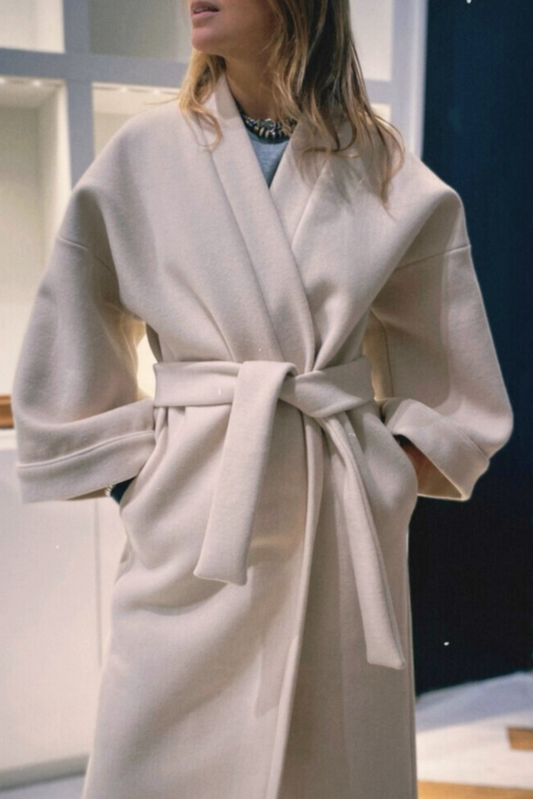
Worn open, the long kimono frames the silhouette with two parallel vertical lines. Worn belted, it becomes a long kimono dress or a structured coat. The defined waist then introduces a point of balance at the heart of this verticality. The long version thus allows for a dual interpretation: fluid or defined, enveloping or architectural.
The long kimono through the seasons
The perception of a long kimono depends closely on the textile.
Whether in wool or velvet, it transforms into a long kimono coat, perfect for winter. The fabric's density enhances the wrap-around effect, providing warmth and structure. The silhouette gains stability. The cut offers protection without requiring excessive layering.
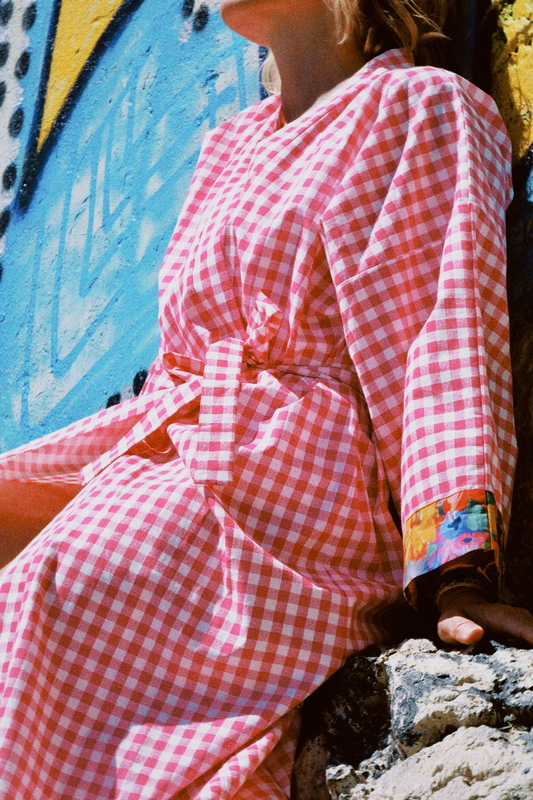
In thick cotton, denim, or jacquard, the long version offers a more versatile look. It can be worn as a light coat in the mid-season or as a loose-fitting jacket to layer with other garments.
In silk or lighter cotton, the long kimono dress takes on a summery feel. The vertical lines remain, but the drape is more fluid. The garment moves with the air, accompanying the walk without adding weight.
The long cut transcends seasons. It is the materials that modulate its weight and feel on the body, while the proportion remains constant.
Urban wrap and use
In an urban setting, the long kimono may seem assertive. However, it serves a functional purpose: to wrap without adding layers.
Worn open, it creates a sleek and flowing silhouette. It frames the outfit without constricting it. Worn belted, it becomes a structured dress or coat, perfect for everyday wear. The long cut allows you to define your silhouette in a single step. It pairs beautifully with straight-leg trousers, a long skirt, or a fitted dress. It can also stand alone when worn closed.
At Atelier Sarita, the long version is the result of meticulous work on proportions. It represents the most expansive expression of the kimono cut, a way to fully explore verticality without sacrificing structure.
A continuous line
The long kimono extends the vertical line in all its breadth. It envelops, complements, and structures. Depending on the fabric and how it's worn, it can become a flowing jacket, a protective coat, or a long dress. It transcends seasons without altering its proportions.
In the Atelier Sarita wardrobe, the long cut embodies the most expansive version of the kimono: a continuous line, designed for the city, for movement and to last.