
-
RICHELIEU - KHAKI WOOL & CASHMERE KIMONO
Regular price €400,00Regular price -
CHOISEUL – ARCTIC WOLF WOOL KIMONO
Regular price €490,00Regular price -
VIVIENNE - KHAKI WOOL & CASHMERE KIMONO
Regular price €450,00Regular price -
COLBERT - CAVIAR WOOL & OUD VELVET KIMONO
Regular price €400,00Regular price -
GUSTAVE - BURGUNDY WOOL & HOUNDSTOOTH KIMONO
Regular price €320,00Regular price -
DODAT - CAVIAR WOOL & OUD VELVET KIMONO
Regular price €350,00Regular price

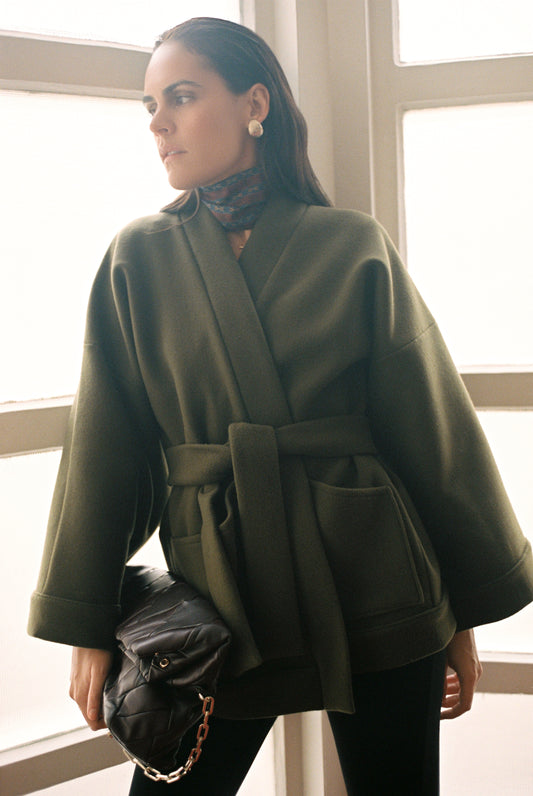

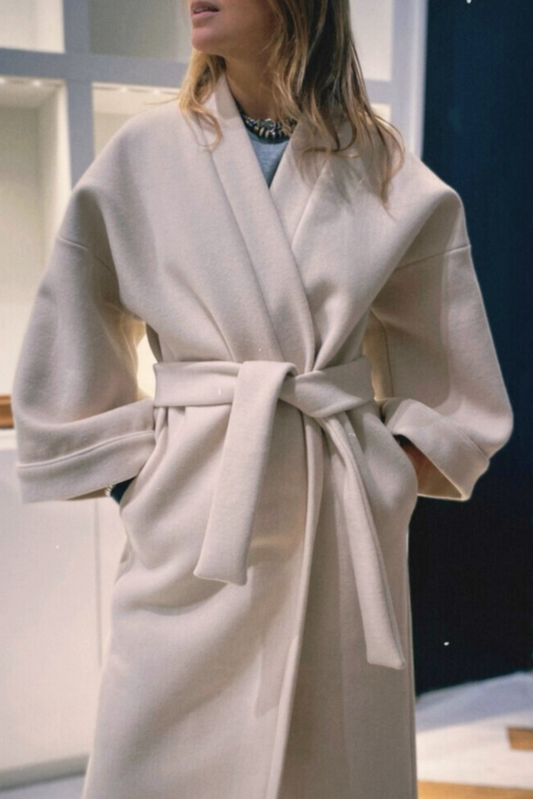

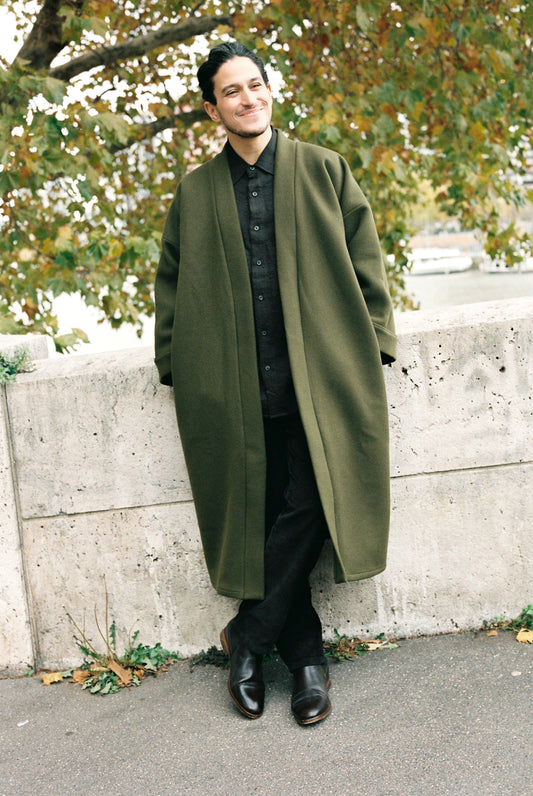

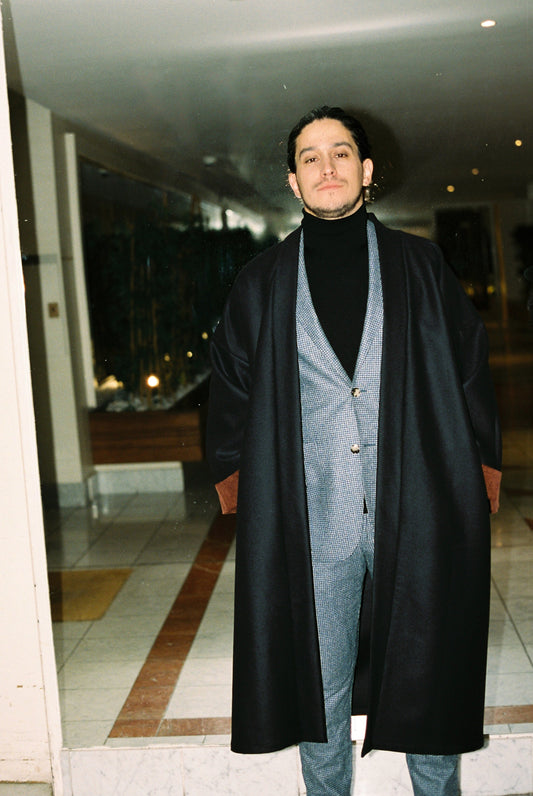
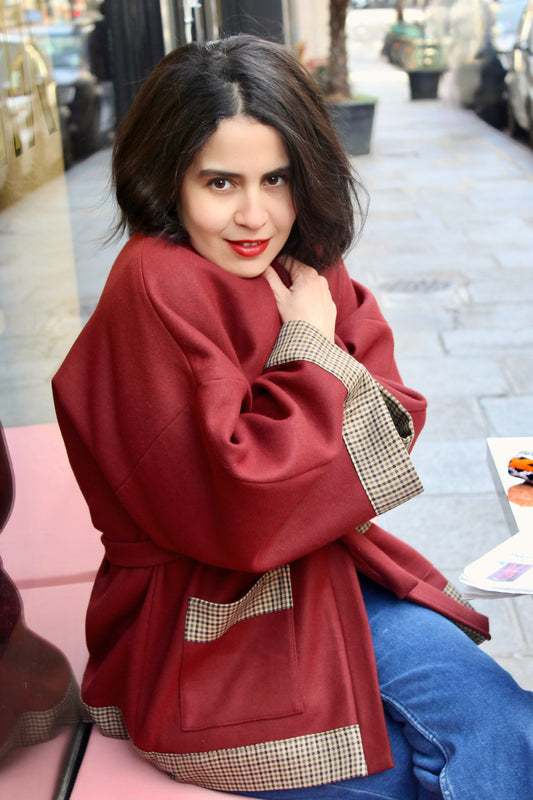
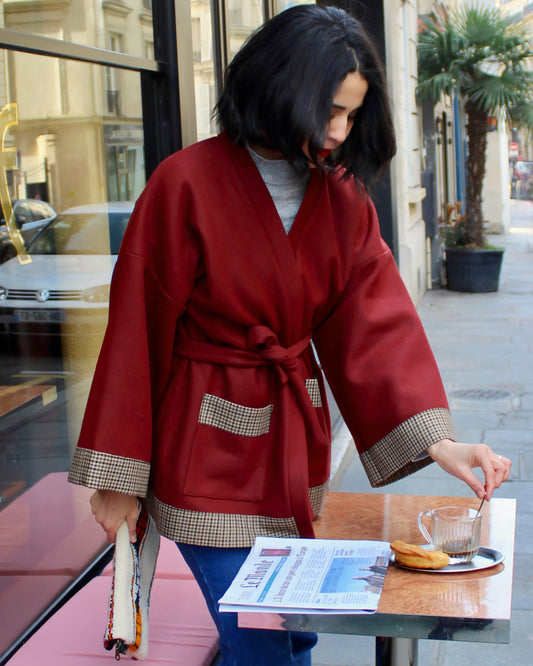

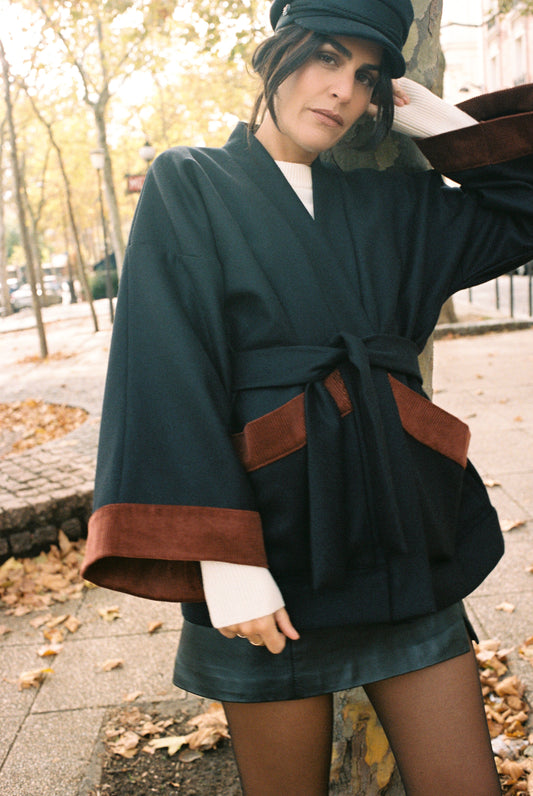
Winter kimonos: jackets and coats designed for warmth, comfort, and long periods of wear.
Winter intensifies our relationship with clothing. When temperatures drop and days shorten, the garment we put on becomes a form of protection in itself. It must envelop, insulate, and move with us throughout our daily lives without ever restricting us.
In the city, winter isn't a time for sitting still. We walk, we cycle, we move around, sometimes for long periods, sometimes in changing conditions. A coat or jacket must meet this reality: protect against the cold, remain comfortable, and be durable.
Winter kimono jackets and coats are designed for this purpose. They rely neither on excessive bulk nor on overly technical features. Their effectiveness lies in a precise combination: suitable materials, enveloping cuts, and construction designed for real-world use.
Warmth and protection: enveloping the body without rigidity
In winter, warmth depends primarily on how clothing wraps around the body. Winter coats and kimono jackets are designed to create continuous protection, without unnecessary exposed areas or breaks in the silhouette. Their enveloping cut helps retain body heat. The shapes are designed to surround the body rather than constrict it. This approach creates natural, effective insulation without any feeling of confinement.
Unlike very fitted coats, the kimono does not aim to cling to the body. It works through balance: enough volume to retain heat, enough structure to maintain a clean line.
Materials play a central role in this protection. Wool is favored for its natural thermal properties. It insulates against the cold while remaining breathable, preventing feelings of dampness. Cashmere provides a softer, more enveloping warmth, particularly welcome in low temperatures. Velvet, being denser, effectively protects against the cold and wind while maintaining a supple feel. These textiles allow you to stay warm without excessive layering. The coat becomes a true envelope, capable of providing the necessary protection during extended periods outdoors.
Whether it's a winter kimono jacket or a longer kimono coat, the logic remains the same: to protect effectively, without weighing down the body or freezing the silhouette.
Everyday comfort: layering, movement, long wear
Warmth only makes sense if it's accompanied by comfort. A winter coat should be wearable all day, sometimes for long periods, without becoming restrictive.
Winter kimono jackets and coats are designed for natural layering. Their cut allows room for a sweater, chunky knit, sweatshirt, or multiple layers without straining the shoulders or restricting movement. This ability to accommodate different layers is essential in winter. Temperatures fluctuate, environments change, and clothing must adapt to these changes. The winter kimono moves with you without requiring constant adjustments.
Unlike some very heavy winter jackets, comfort here comes not from weight, but from balance. The materials provide warmth without excessive stiffness. The garment's construction allows for freedom of movement: walking, raising arms, sitting, standing, carrying a bag. Even when offering genuine thermal protection, these coats remain comfortable to wear. They don't tire the body. They don't give the feeling of wearing a restrictive garment.
The belt, when present, allows you to adjust the garment as desired: more enveloping in very cold weather, more open when the temperature is milder. This modularity contributes to overall comfort.
The winter kimono thus becomes a garment that one wears without thinking about it. A garment that adapts to what one wears underneath, to movement, to the rhythm of the day.
Getting through the winters: durability and quality materials
Winter puts clothing to the test. Cold, humidity, repeated friction, and intensive wear: a poorly designed garment quickly shows its limitations. Winter kimono jackets and coats are designed to withstand these stresses. Their durability relies on two fundamental elements: the choice of materials and the quality of construction.
Wool, cashmere, velvet, and certain heavyweight jacquards are selected for their ability to retain their properties over time. These materials don't quickly lose their shape. They maintain their warmth, structure, and comfort, season after season. These fibers age beautifully. They develop a patina and soften slightly without losing their shape. They work with time rather than being affected by it.
The garment's construction is designed for repeated use. The seams are sturdy, the finishes meticulous, and high-stress areas reinforced. The kimono coat or jacket is designed to be worn frequently, for several winters in a row.
This durability allows you to build a stable winter wardrobe. One piece becomes a staple. You find it year after year; you know how it fits, how it performs in the cold, how to style it. Rather than accumulating multiple coats, you choose one piece that can last through several seasons. A piece that remains relevant, functional, and comfortable.
The winter kimono, a constructed response to the cold season
Winter places clear demands on clothing: warmth, comfort, and durability. Winter kimono jackets and coats meet these requirements without excess or compromise. They envelop the body, allow for layering, remain comfortable for everyday wear, and are designed to last. Their effectiveness relies on suitable materials, precise cuts, and construction designed for real-world use.
Designed for the city, they accompany you on your travels, through long days, and through successive winters. The winter kimono thus becomes an essential wardrobe piece: protective, comfortable, and durable. A piece you can rely on, season after season.